Monitoring
To optimize irrigation, it is crucial to monitor accurate indicators and use them for proper irrigation timing. The CleverFarm app integrates data from soil sensors and weather stations to provide insights into key factors such as air and soil temperature, relative humidity, wind speed, direction and gusts, leaf wetness, radiation (sunshine intensity), evapotranspiration, volumetric water content of soil, suction pressure, electrical conductivity (salinity), and other indicators.
Thanks to this, you can precisely adjust water application to the specific conditions of each site and the needs of individual crops. The result is accurate irrigation dosing, cost savings, and more stable plant growth. Thus, CleverFarm helps you not only save water but also improve crop health and yield.

Professional hardware for collecting all necessary data
professional weather station
The high-quality wireless weather station provides data with accuracy in accordance with the standards of the World Meteorological Organization.
salinity sensor
It measures soil moisture, temperature, and electrical conductivity. This sensor helps you optimize irrigation.
volumetric sensor
It measures soil moisture and temperature. The sensor helps you optimize irrigation and determine the appropriate planting time.
SETTING HYDROLIMITS
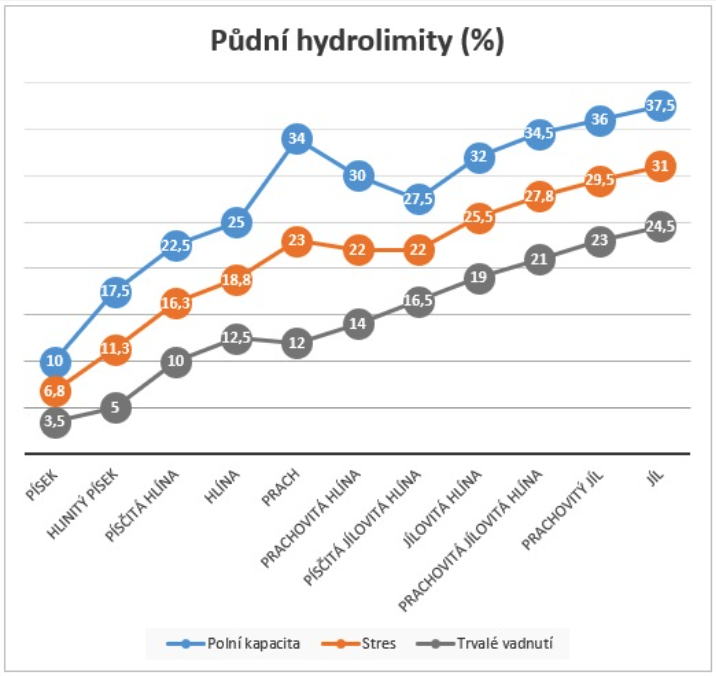
Each crop has key periods during its growth when it requires sufficient water and nutrients for optimal development. In these critical phases, a lack of moisture can affect plant health as well as yield, which cannot be recovered later in the season.
We help our clients set hydrolimits — an ideal soil moisture level adapted to soil type, crop, and its growth stage. With this approach, we ensure that plants receive exactly the amount of moisture they need.
EVAPOTRANSPIRATION
Monitoring meteorological indicators such as temperature, solar radiation, air humidity, and evapotranspiration allows you to better control irrigation. Evapotranspiration indicates the amount of water that evaporates from the soil and is released from plant leaves, helping to predict a decrease in soil moisture. Higher temperatures, wind speed, and solar radiation intensity accelerate this decline, while relative humidity can either increase or decrease it.
This data allows irrigation cycles to be planned more accurately, ensures correct timing of watering, identifies where irrigation is necessary, and enables more efficient water use for healthy crop growth.
VITA-ZEL controls irrigation intelligently thanks to CleverFarm technologies
View full case studyoptimization of nutrition
Soil monitoring also allows you to track electrical conductivity, from which salinity — the concentration of salts in the soil — can be derived. This can affect the availability of water and nutrients for plants. High salinity makes it more difficult for plants to absorb water and nutrients, which can limit growth and reduce yields.
Using CleverFarm sensors, we monitor electrical conductivity (EC) values that indicate the salinity level in the soil. Thanks to these data, fertilisers can be precisely dosed, especially in drip irrigation systems with fertigation, and irrigation and nutrient supply can be adapted to the specific needs of crops, ensuring optimal growing conditions.
.gif)

expert advice
Thanks to our many years of experience, we provide our clients with comprehensive precision irrigation services that help them optimize water use and effectively manage the irrigation regime according to the specific conditions of their fields.
How it works in practice
1. Soil analysis and determination of hydrolimits
Collaboration with CleverFarm begins with soil sampling directly in the field. Laboratory analysis is then performed to determine soil texture and the exact soil type. Based on this data, we subsequently define so-called soil hydrolimits:
- field capacity (the maximum amount of water that the soil is able to retain),
- wilting point (the boundary below which plants are no longer able to draw water),
- and optimal humidity range for effective watering.
2. Irrigation Scheme Design
Thanks to this data, we can accurately determine when, where, and how much to irrigate. The goal is to reduce water and energy waste while ensuring optimal conditions for crop growth. We help clients tailor irrigation and nutrient management to the specific needs of their soil and crops.
3. Utilization of satellite and sensory data
We also integrate satellite data into the process to evaluate field heterogeneity — the differences in soil and vegetation properties within a single field. Based on this data, we identify the most suitable locations for installing soil moisture sensors and other measuring devices.
4. Installation and interpretation of data
During the installation of the devices, we explain to clients which phenomena are being monitored, why they are important, and what changes can be expected based on the data. Subsequently, we provide regular evaluation of the collected data with clear and practical recommendations for adjustments in fertilisation or crop nutrition.
We’ll be happy to help you with precision irrigation. Just get in touch!
Peter
Zloty
Product Manager for Precision Irrigation
petr.zloty@cleverfarm.ag
+420 604 541 988
VOJTECH
zaverka
Product Specialist for Precision Irrigation
vojtech.zaverka@cleverfarm.ag
+420 797 973 108