IoT sensors and weather stations for accurate field data
Get accurate weather and conditions data on your properties. IoT sensors and weather stations bring clear measurements directly to the CleverFarm platform.
IOT SENSORS AS THE BASIS OF DATA-DRIVEN AGRICULTURE
IoT sensors provide continuous monitoring in the field. They monitor soil condition, microclimate and other factors that affect yield, quality and economy of operation. It sends the data wirelessly to an online platform, where it is immediately available for further evaluation.
Benefits of IoT sensors in practice
Making decisions based on reality, not guesswork Current and historical data in one place.
More accurate timing of agronomic interventions Irrigation, fertilization as well as plant protection according to actual conditions.
Prevention of Economic Losses Timely identification of risk situations even before they cause damage to the crop or yield.
Saving time and cost Automated data collection directly from the field without the need for regular manual inspection.
IoT sensors form the basis of modern farm management. They provide data from the field to enable more accurate and timely decisions.
All measured data is clearly displayed in the CleverFarm application — both current and historical. So you have access to them from anywhere and anytime.
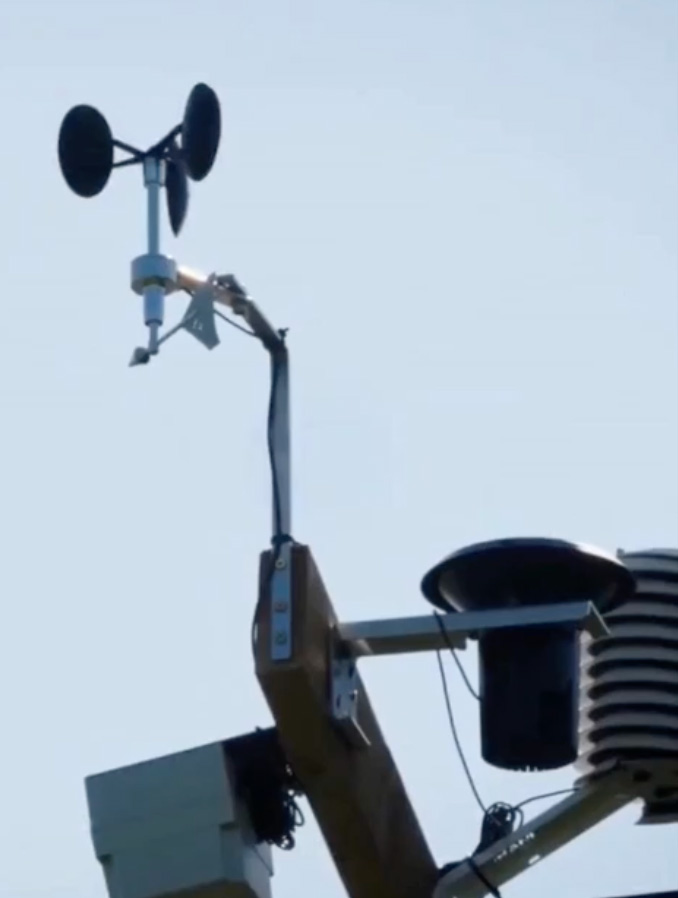
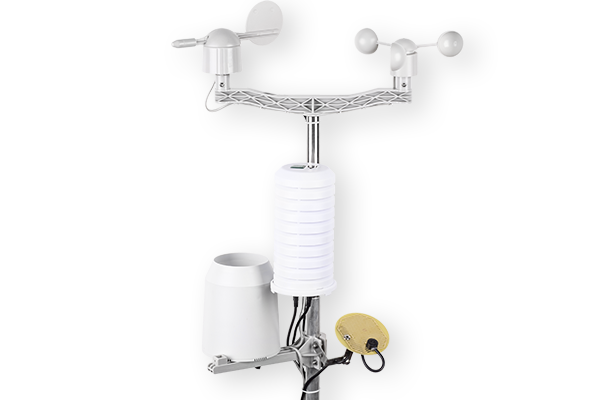
Local meteorological data are the basis for the correct timing of agronomic interventions, crop protection and risk assessment. The PROFI weather station transmits the measured data online to the application, where it is immediately available without the need for manual inspection.
Our professional weather station meets the demanding requirements for accuracy and measurement range. It is designed for intensive production, detailed monitoring and decision-making, where every millimeter of precipitation and every degree of temperature plays a role.
What quantities does the weather station measure:
Temperature
rainfall
Humidity
Wind force, direction and gust
Evapotraspiration — the amount of water that evaporates from the soil and from plants
What benefits will this weather station bring to you:
Current weather picture of your fields Get accurate weather data right from where you need it — without estimates and manual measurement.
More efficient planning of agronomic interventions With local weather data, you can better time sowing, fertilizing, and harvesting.
Better decision-making in crop protection Monitoring current conditions helps to identify risk periods for the appearance of diseases and pests in a timely manner and reduce unnecessary interventions.
Convenient remote monitoring You place the weather station directly on the property and you can track the measured data from anywhere — from the office, home and from the field.
Weather stations PROFI specs
meteostanice PG sonda
Lokální meteorologická data jsou klíčová pro přesné řízení agronomických zásahů, ochranu porostů i optimalizaci hospodaření s vodou. Meteostanice PG Sonda kontinuálně sleduje mikroklimatické podmínky přímo na poli a automaticky přenáší naměřená data online do aplikace, kde jsou okamžitě dostupná pro další analýzu.
Díky autonomnímu provozu, solárnímu napájení a pravidelnému odesílání dat poskytuje spolehlivý přehled o aktuálním počasí i dlouhodobém vývoji klimatických podmínek na vašich pozemcích.
Jaké veličiny meteostanice měří:
Teplota
Srážky
Vlhkost
Síla, směr a poryv větru
Evapotraspirace – množství vody, které se odpařuje z půdy a z rostlin
Jaké přínosy VÁM TATO meteostanice PŘINESE:
Přesná data přímo z vašich pozemků Získáte aktuální meteorologické informace z míst, kde hospodaříte, místo spoléhání na regionální předpověď.
Lepší plánování závlahy a hospodaření s vodou Sledování srážek, radiace a evapotranspirace pomáhá optimalizovat zavlažování a snížit ztráty vody.
Podpora rozhodování v ochraně rostlin Data o teplotě, vlhkosti a ovlhčení listů jsou důležitým vstupem pro modely chorob a škůdců.
Automatický monitoring bez nutnosti kontroly v terénu Stanici umístíte přímo na pole a aktuální data můžete sledovat kdykoliv v aplikaci – z kanceláře i z mobilu.
Meteostanice PG SONDA specifikace
meteostanice plus
Znalost aktuálních podmínek na pozemku pomáhá lépe načasovat běžné agronomické práce. Meteostanice BASIC sbírá základní meteorologická data a přehledně je zpřístupňuje v aplikaci CleverFarm.
Jedná se o základní řešení pro spolehlivé sledování meteorologických podmínek přímo na pozemku. Tato meteostanice je vhodná pro běžné agronomické řízení, optimalizaci zásahů a přehled o lokálním počasí.
Jaké veličiny meteostanice měří:
Teplota
Srážky
Vlhkost
Síla, směr a poryv větru
Jaké přínosy VÁM TATO meteostanice PŘINESE:
Aktuální povětrnostní obraz vašich polí Získáte přesná meteorologická data přímo z míst, kde je potřebujete – bez odhadů a manuálního měření.
Efektivnější plánování agronomických zásahů Díky lokálním meteorologickým datům můžete lépe načasovat setí, hnojení i sklizeň.
Lepší rozhodování v ochraně porostů Sledování aktuálních podmínek pomáhá včas identifikovat riziková období výskytu chorob a škůdců a omezit zbytečné zásahy.
Pohodlný vzdálený monitoring Meteostanici umístíte přímo na pozemek a naměřená data můžete sledovat odkudkoliv – z kanceláře, domova i z terénu.
Meteostanice PLUS specifikace
weather stations BASIC
Knowledge of the current conditions on the plot helps to better time ordinary agronomic work. The BASIC weather station collects basic meteorological data and makes it clearly accessible in the CleverFarm application.
It is a basic solution for reliable monitoring of weather conditions directly on the property. This weather station is suitable for general agronomic management, optimization of interventions and overview of local weather.
What quantities does the weather station measure:
Temperature
Humidity
What benefits will this weather station bring to you:
More efficient planning of agronomic interventions With local weather data, you can better time sowing, fertilizing, and harvesting.
Convenient remote monitoring You place the weather station directly on the property and you can track the measured data from anywhere — from the office, home and from the field.
Weather stations BASIC specs
Soil Salinity Sensor
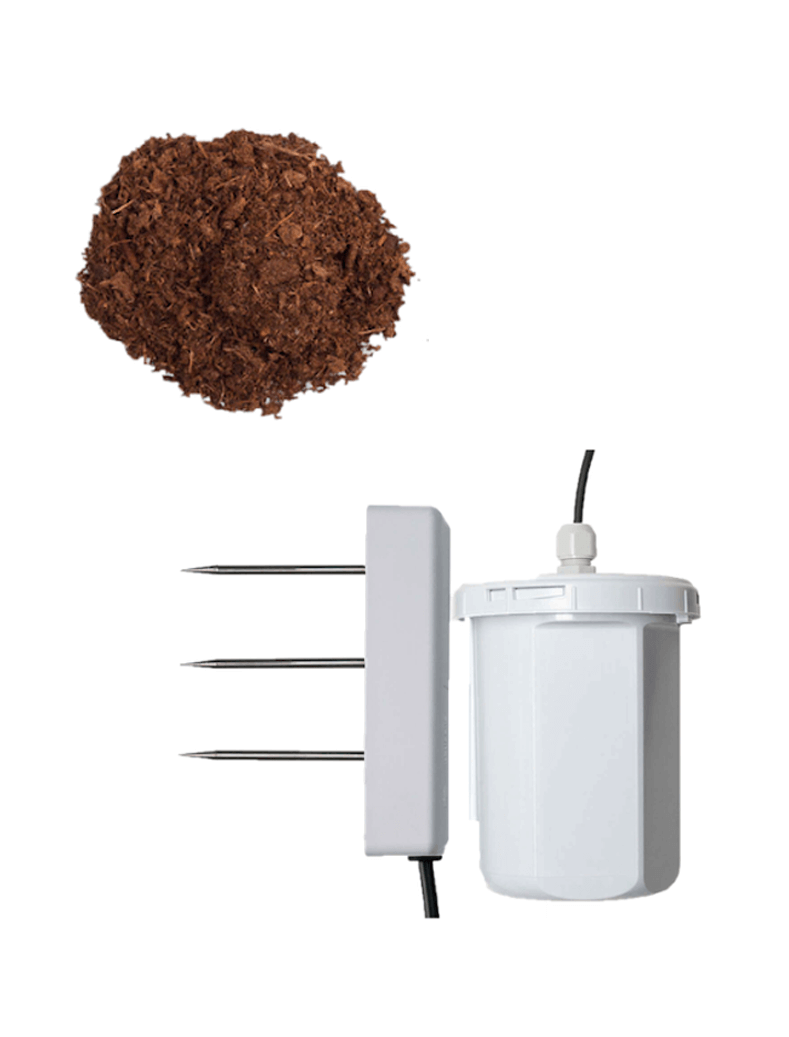
Local data on electrical conductivity (salinity) help to accurately control the nutrition of plants, for example, in the use of fertigation. Sensor measures soil salinity along with humidity and temperature, so you get a comprehensive overview of the condition of the soil. Thanks to this, you can Manage irrigation and fertilizing more efficiently and at a lower cost. The measured data also show how many salts are found in the soil and how they affect the availability of water for plants. Higher salinity can limit the ability of roots to take in both water and nutrients, which negatively translates into growth and yields. An advanced sensor will help reveal not only lack of moisture, but also excessive salinization of the soil and respond to it in a timely manner.
This allows you to:
monitor soil salinization when fertilizing,
optimise irrigation and fertigation
prevent plant stresses caused by high salinity.
An advanced sensor that measure water potential and soil temperature — a more accurate indicator of the actual availability of water for plants. This will help you better find the line between waterlogging and drought and You save both water and costs in the management of irrigation.
What quantities does the sensor measure:
Temperature
Volume content of water
Electrical Conductivity
WHAT BENEFITS THIS SENSOR WILL BRING YOU:
Irrigation management according to actual water availability It measures the water potential of the soil, that is, how difficult it is for plants to take in water. It does not only address how much water is in the soil, but whether it is actually usable for the roots.
Prevention of plant stress It reveals situations where the soil contains water, but plants are nevertheless stressed (e.g. due to the binding of water to soil particles). It allows you to react before there is a decrease in yield.
Saving water without the risk of under-irrigation It helps to find a balance between overwatering and drought. Irrigation only runs when it makes real agronomic sense.
Suitable for intensive production Ideal where there is a high sensitivity to water stress — vineyards, orchards, vegetables, specialized crops.
Soil Salinity Sensor specs
Volumetric Soil Sensor
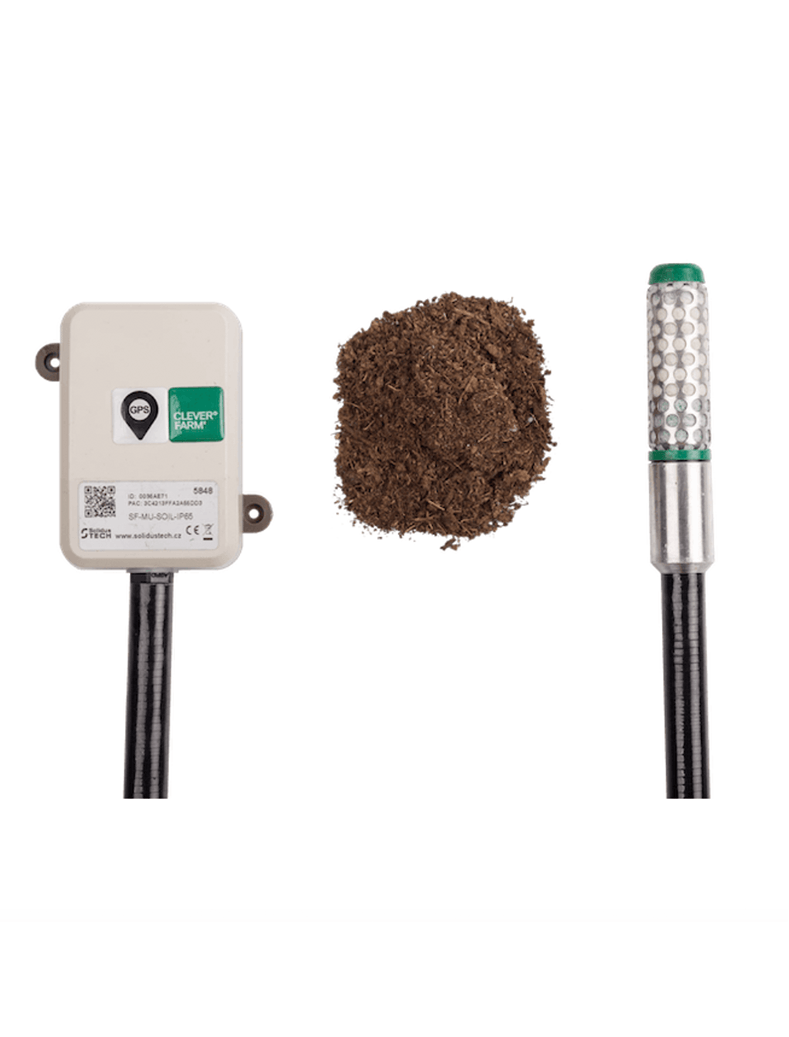
The soil sensor Volumetric is ideal choice wherever you want to control the water condition of the soil — from fields and vineyards to orchards. Thanks to this, you get data-driven overviewthat replaces estimates and manual checks and leads to both water savings and higher harvest quality. The measured values with the sensor are transmitted wirelessly to the application, where you can immediately use them for efficient irrigation management and planning of agrotechnical interventions.
The soil sensor Volumetric is basic IoT sensorwhich continuously monitors humidity (volume content of water) and soil temperatureThe sensor measures soil moisture as a percentage, that is, how much water is currently available to plant roots in the soil. This helps prevent both overwatering and lack of moisture.
It also monitors the soil temperature in °C, which is important for the correct timing of sowing, germination and application of fertilizers and plant protection products.
What quantities does the sensor measure:
Temperature
Volume content of water
WHAT BENEFITS THIS SENSOR WILL BRING YOU:
Irrigation optimization Real-time humidity measurement allows you to start irrigation exactly where and when it's needed, saving both water and running costs.
Better planning of agrotechnical works Both temperature and soil moisture data improve the timing of sowing and other interventions — reducing the risk of errors and yield losses.
Simple integration into smart irrigation The sensor is easy to install in the ground (10—20 cm) and its data can automatically control your irrigation systems via an online platform.
Soil sensor Volumetric specs
Soil Absorb Sensor
The soil sensor Volumetric is ideal choice wherever you want to control the water condition of the soil — from fields and vineyards to orchards. Thanks to this, you get data-driven overviewthat replaces estimates and manual checks and leads to both water savings and higher harvest quality. The measured values with the sensor are transmitted wirelessly to the application, where you can immediately use them for efficient irrigation management and planning of agrotechnical interventions.
The soil sensor measures soil moisture and temperature at the depth of the sensor insertion. To measure water potential a soil based sensor was used Moisture Absorption Watermark, thereby eliminating influences that could distort the measurement, and is not Calibration required on soil type and chemical composition.
The thermometer is an integral part of the measuring probe and the sensor is made up of Very durable materialto stop even adverse conditions on the field. The sensor is also available in a wired version.
What quantities does the sensor measure:
Temperature
rainfall
WHAT BENEFITS THIS SENSOR WILL BRING YOU:
Irrigation according to the actual need of the plants Water potential will indicate the moment when plants begin to have trouble receiving water — the perfect time to start irrigation.
Prevention of hidden water stress It reveals situations where the soil contains water, but it is difficult for the roots to access (e.g. heavy soils).
Water savings of up to tens of percent By optimizing irrigation according to soil conditions, water consumption and costs can be significantly reduced.
Higher yield stability Keeping the soil within the optimal range of water potential promotes even growth and production quality.
Soil Absorb Sensor specs
control unit
Central Irrigation Control allow you to turn off and turn on irrigation from home or office. Everything is Remotely controlled in the appwhere you can form irrigation plans or control irrigation manually.
Thanks to the unit, watering schedules can be set in the application so that Irrigation as efficient as possible. By connecting sensors that measure soil moisture and temperature and a trigger unit, you achieve automated and optimized irrigation.
The unit can open up to 8 solenoid valves in one shaft and can be controlled remotely using low-power IoT networks (narrowband IoT, LoRa, Sub-G). The unit also sends telemetry information about internal temperature and humidity, battery status, valve status.
Expert Expertise
You can contact a team of experienced IoT sensor specialists at any time. We will help you with the design and use of sensors for irrigation and other agronomic purposes.

.png)


.gif) + more info
+ more info